

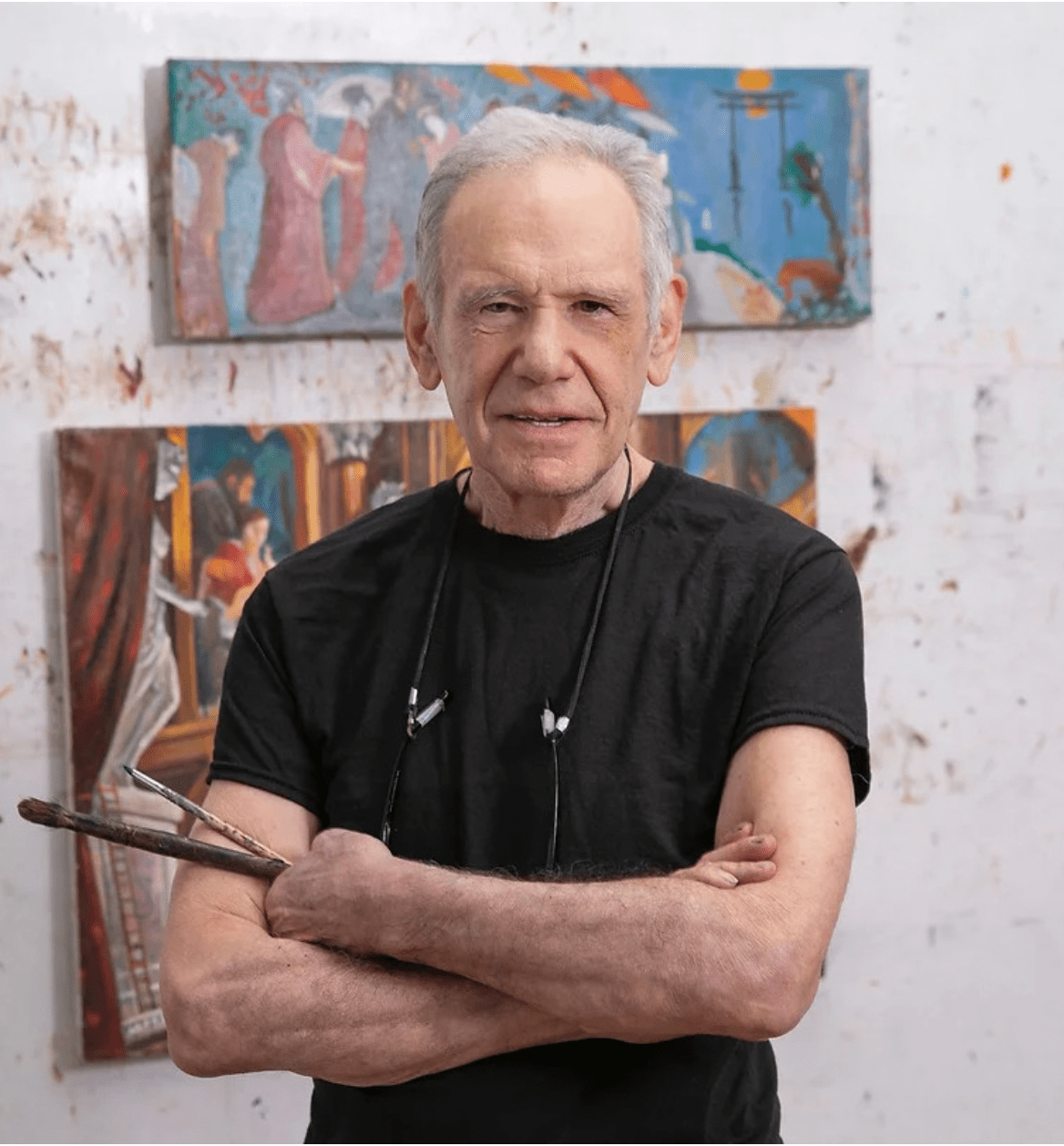
Donald Perlis is a renowned artist in the growing field of American art. He is known for his canvases confronting the world with abstraction and unflinching visual truth. As a New York-based painter with a career of over 50 years, Perlis’ work converges classical technique and contemporary urgency.
From his early days as a prodigious talent in the Bronx to his later progress as a socially engaged artist, his George Floyd painting was displayed on billboards across the U.S. Born and raised in the Bronx, Perlis was immersed in the texture of urban life from an early age.
Drawn to the arts at a young age, he polished his skills at the School of Visual Arts, the Skowhegan School of Painting and Sculpture, and The Art Students League under the guidance of masters like Robert Beverly Hale and Richard Pousette-Dart.
These years cultivated a technical fluency in drawing, painting, and a deep respect for the structural and emotional depth of the human form. In the 1960s, Perlis became the youngest member of a group of artists who led the revival of representational painting during an era dominated by minimalism and conceptual art.
This cohort included artists Philip Pearlstein, Alice Neel, Lennart Anderson, Paul Georges, Alfred Leslie, and William Baily. At a time when figuration was considered old-fashioned, Perlis and his peers insisted on the relevance of realism, specifically the one rooted in perception, memory, and the human condition.
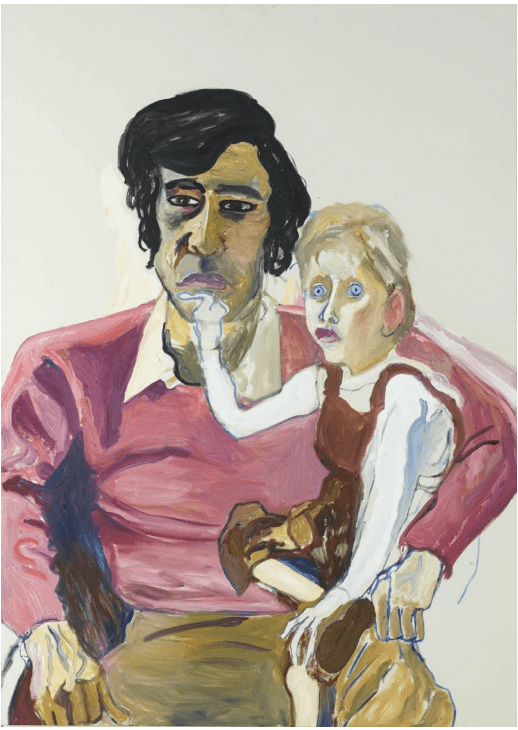
Perlis’ breakthrough came in 1970 when he was included in the landmark 22 Realists exhibition at the Whitney Museum of American Art, recommended by Marcia Tucker and organized by James Monte. The show was a turning point in American painting, and Perlis’ participation placed him in the national spotlight.
Soon after the successful show, he became the youngest artist to exhibit at the prestigious Graham Gallery in New York City alongside Edwin Dickinson, Alice Neel, and Lennart Anderson. Art News magazine, under the leadership of Tom Hess, then rewarded him with a major article on his work entitled “ How To Be an Old Master at 28”. This recognition upscaled his status as a serious painter committed to reviving a classical tradition within a modern context.
Unlike many of his contemporaries, Perlis rejected photographic reference, preferring to construct his compositions from direct observation, imagination, and remembered sensation. His strong grip of oil painting, its texture, luminosity, and range allowed him to create works that possess both technical precision and psychological complexity.
His paintings often employ continuous spatial fields, avoiding collage-like fragmentation in favor of unified, immersive environments. This perceptual continuity anchors even his most dramatic narrative scenes in a felt reality.
At the age of 40, his artistic focus expanded. While his early work explored mythology, opera, romantic literature, and contemporary themes, he began engaging more directly with modern social issues. His realist vision sharpened into one that represented life and interrogated it. Scenes of subway shootings, protests, and street confrontations began to appear in his work.
These weren’t journalistic portraits but painterly meditations on the fractures of modern urban existence. Perlis’ canvas became a mirror to society’s injustices, tensions, and unresolved traumas. His 2020 painting, Floyd, was a defining moment in this evolution. Created in response to the murder of George Floyd, the work captures the raw humanity of the moment.
Recognizing its cultural resonance, Perlis partnered with public art initiatives to display the image on billboards in cities nationwide, including a placement in Times Square. This gesture extended his work beyond galleries and into the public sphere, turning it into a visual act of protest, remembrance, and solidarity.
Outside the studio, Perlis has dedicated more than 40 years to teaching at institutions like the Fashion Institute of Technology and Pratt Institute. His pedagogical approach has influenced countless students to pursue figuration with discipline and moral intent. As a founding member of the Artists’ Choice Museum, Perlis has also helped preserve its place in an often conceptually driven art world.
His work is held in the collections of major institutions including the Minneapolis Institute of Art, the Corcoran Gallery of Art, the National Academy Museum, the Hechsher Museum, and the Colby Museum of Art. In 1994, the National Academy of Design elected him a National Academician. Most recently, he was named a 2025–2026 Sharpe-Walentas Studio Program Awardee.
Perlis’ legacy reflects conviction, craftsmanship, and conscience. At a time when realism is often dismissed as nostalgic or politically inert, he has proven its vitality as a medium of both aesthetic and social inquiry.
Whether delivering a mythic romance or a moment of civil unrest, Perlis paints with a clarity that demands the public to look, and look again.