


In a state like California—known for its innovation, fast-paced tech environment, and social justice movements—it comes as no surprise that one of the most groundbreaking platforms disrupting the healthcare space today was designed to even the odds for patients lost in a sea of confusing, overpriced, and often unfair medical bills. That platform is Patient Fairness in America, and it’s rapidly becoming a go-to solution for Californians navigating an increasingly hostile medical billing system.
Launched in 2022 by founder and CEO Matthew Ungs, Patient Fairness began by serving just four states, with California as one of its original strongholds. “I founded Patient Fairness in 2022, and California was one of the four states we initially served,” Ungs shares. “We now serve all 50 U.S. states and the District of Columbia.” While national in reach, Patient Fairness has always maintained a strong connection to the California healthcare landscape, where rising medical costs and complex billing systems have left patients financially vulnerable and often powerless.
The challenges faced by Californians are not unique, but they are magnified by the state’s enormous and diverse population. Despite being home to some of the nation’s top healthcare institutions, California ranks 10th in the country for the highest average hospital charge levels—an astounding 506% of what it actually costs hospitals to provide the services. “That means that for every $100 it costs a hospital to render a service, it bills $506, of which $406 is profit,” Ungs explains.
These staggering numbers highlight a deeper issue: the normalization of profit-driven healthcare practices. And while California does offer stronger consumer protections than many other states, those protections can be hard to navigate without assistance. Patient Fairness bridges that gap with a platform designed to empower the average patient, providing them with both the tools and the strategy to challenge what often feels like an impenetrable wall of bureaucracy and billing practices.

So, how does the service actually work?
Using the Patient Fairness website, customers can open a case by uploading their problematic medical bill and answering a few basic questions. From there, the company generates a custom letter of dispute and sends it to the medical provider on the patient’s behalf. But it doesn’t stop at paperwork. “Patient Fairness guides and supports the patient in evaluating a provider’s response… and documenting any settlement of the dispute,” Ungs explains. Flat-rate fees start at just $49 for bills under $500, making the service accessible to a wide range of Californians—particularly those without high-end insurance plans or legal teams.
Patient Fairness is grounded in the principle that medical billing shouldn’t feel like a game of roulette. “We help patients formally dispute problem medical bills based on objective reasons,” Ungs notes, citing issues such as excessive pricing, lack of informed consent, or charges for out-of-network providers unknown to the patient. It’s not about begging for leniency. As Ungs puts it, “When it comes to problem medical bills, don’t ask for mercy. Demand fairness.”
And Californians are listening.
The state’s vast network of healthcare facilities—from massive hospital systems in Los Angeles to community clinics in Fresno—means patients are constantly exposed to a broad spectrum of pricing, quality, and administrative behavior. In the aftermath of the COVID-19 pandemic, healthcare demands have skyrocketed, particularly in areas such as mental health services, urgent care, and telemedicine. Simultaneously, the average out-of-pocket cost for insured patients in California has risen sharply, and surprise billing remains a persistent issue.
National data suggests that over 60% of Americans have received an unexpected medical bill, and the problem is even more acute in populous, high-cost-of-living states like California. Patient Fairness is uniquely positioned to address this crisis, not by avoiding the fight, but by giving patients the armor they need to engage it.
A key ally in this fight? Federal transparency laws, which have begun to turn the tide in favor of consumers. President Trump, across both terms in office, has made price transparency a central pillar of healthcare reform. “He has issued executive orders requiring hospitals to publish their prices in both his first and current terms,” Ungs explains. “The President’s most current order… should help patients in California and the rest of the nation.”
Still, less than half of U.S. hospitals comply with these transparency requirements, making the services of Patient Fairness all the more crucial. By leveraging these regulations—alongside California’s own consumer protections—Ungs and his team help patients challenge inflated charges using a formal, strategic process that gives them legal footing and negotiating leverage.
Unlike traditional billing advocates who often charge a percentage of the amount saved or hourly rates, Patient Fairness maintains a transparent, flat-fee pricing model. And perhaps most compelling is the company’s satisfaction guarantee: if a customer isn’t happy within 60 days, they can close their case without owing anything beyond the initial $49.
While other firms may offer to “negotiate” with healthcare providers, Ungs believes negotiation should never be the starting point. “Simply asking a provider to negotiate a lower price is not likely to achieve the best outcome for a patient,” he says. “If there is a negotiation, the patient is negotiating from a position of strength.”
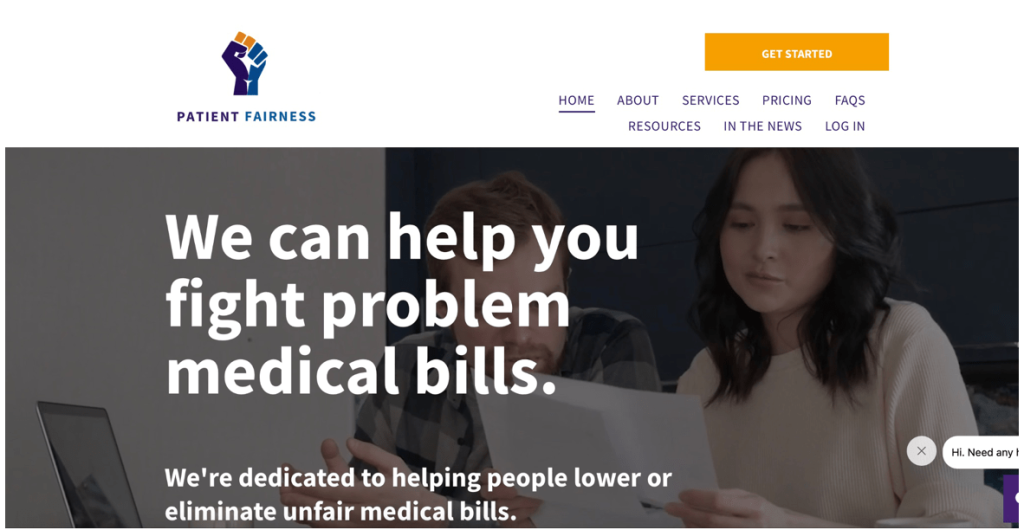
This emphasis on structured dispute—not pleading—has been a game-changer for many Californians who felt their only recourse was either to pay or enter collections. Patient Fairness levels the playing field against the powerful and well-equipped billing departments of hospitals and physician groups.
In a state where over 39 million people rely on a healthcare system that often feels like it’s working against them, platforms like Patient Fairness aren’t just helpful—they’re essential. The company represents a broader shift in how Californians approach their rights in the medical arena, where clarity, affordability, and fairness have too often been elusive.
As demand continues to surge across the nation, Patient Fairness remains deeply rooted in the challenges and victories of the California healthcare experience. And as more patients learn to fight back—not with anger, but with evidence, law, and structure—it’s clear that the revolution in patient empowerment is well underway.
Or, as Matthew Ungs might put it: “Don’t ask for mercy. Demand fairness.”