

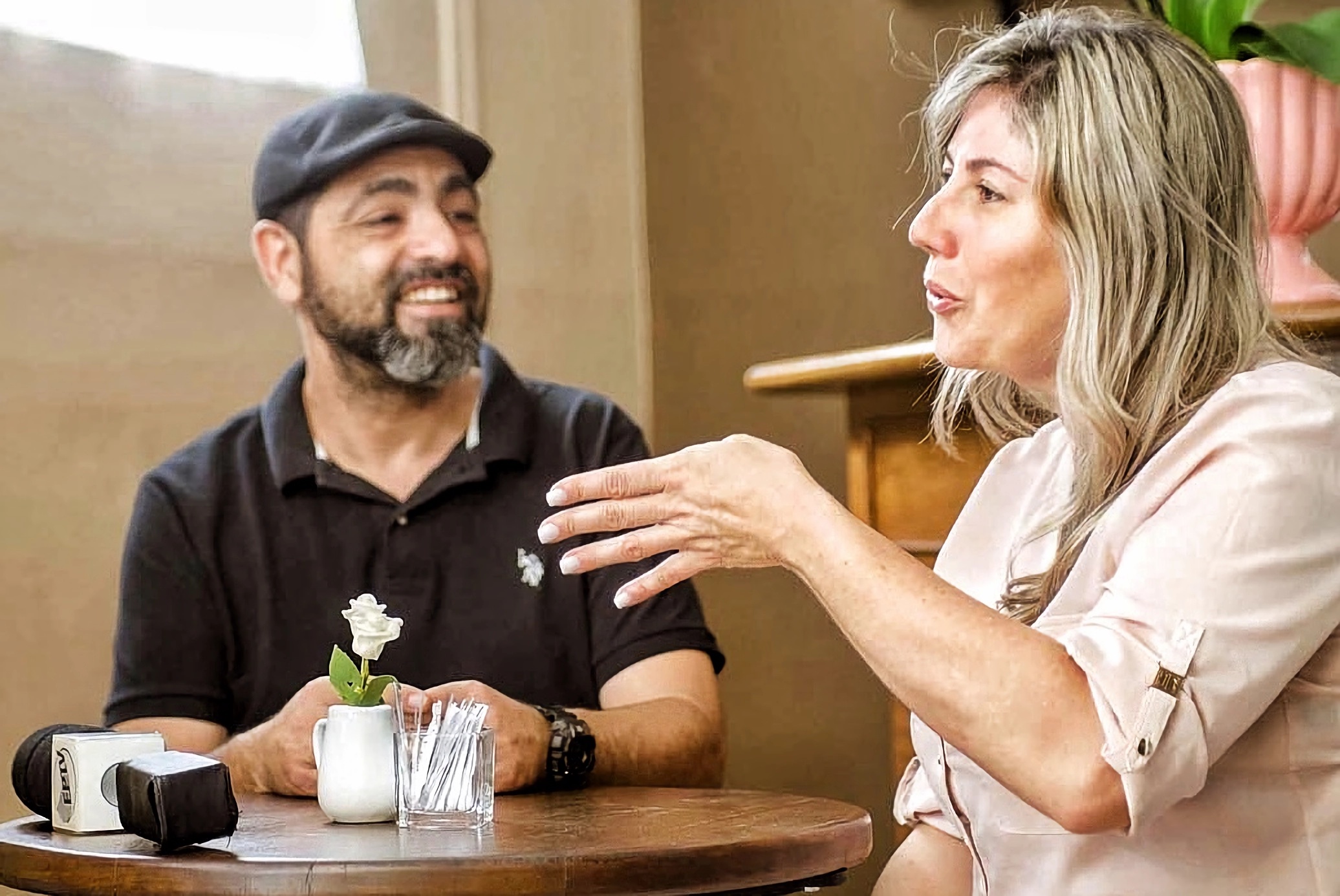
In 2012, Paula Dias sat quietly in an auditorium in her hometown of Santa Rita do Sapucaí, Brazil, listening to Diego Parra, the Colombian branding strategist behind coffee icons like Juan Valdez. Having just returned after nearly a decade in the San Francisco Bay Area, Paula was struck by Parra’s vision: specialty coffee as a cultural engine for small-town renewal. It reminded her of the cafés in Berkeley and Palo Alto—spaces alive with ideas, creativity, and connection.
“At that moment,” Paula recalls, “I realized our coffee wasn’t just a product—it was a story, a way to reconnect our town to the world.”
She and her husband, Pedro, soon launched Grandpa Joel’s Coffee, named after Pedro’s father. Their plan wasn’t just to produce great coffee—it was to reimagine their town of 40,000, located 120 miles from São Paulo, as a model for integrating local agriculture with innovation.
Santa Rita made its name decades earlier as Brazil’s “Electronic Valley,” home to INATEL, one of the country’s top tech institutes. The school helped transform the town into a magnet for engineering talent, much like Stanford’s role in shaping Silicon Valley.
But by the 2000s, that momentum faded. Globalization led many companies to focus on assembling imported tech instead of building new ideas. Santa Rita risked losing its edge—until a new generation embraced the creative economy.
“Santa Rita uniquely connects farming, roasting, branding, and exporting—all within one small community,” says Dr. Alejandro Moreno, a UCLA cultural anthropologist. “Most coffee cities import beans. Santa Rita controls the whole narrative.”
Grandpa Joel’s became a centerpiece. Its beans now reach cafés in California and beyond, while its café doubles as a meeting hub. During HackTown—a town-wide innovation festival launched in 2016—Grandpa Joel’s becomes a key venue, and Paula and Pedro’s session one of the event’s most anticipated.
“HackTown takes the network energy of places like Seattle and distills it into a tightly woven, creative town,” says Michael Dwyer, a Berkeley-based urban planner. “That’s why Santa Rita stood out so clearly at the Big Towns Summit”—a U.S. conference exploring the future of midsize cities through culture, economy, and community design.
Inspired by Grandpa Joel’s, hundreds of entrepreneurs—many of them women—have launched ventures across the coffee value chain. Startups like CampoTech and Agrorigem now fuse local beans with global tech, while farm-based tourism has become a thriving part of the region’s economy.
Santa Rita’s renaissance rests on three forces: a robust tech sector, a vertically integrated coffee culture, and events like HackTown that tie both to the world. It’s a reminder that the next global idea might just come from a small-town café.