

Tredway’s Texas and New Orleans properties run on the same kind of federal rent contract New York’s housing authority uses to repair public housing, though Tredway has no RAD deals in the city.
An evaporative cooler is a simple machine, a fan that pulls outside air across water-soaked pads so the evaporating water carries off some of the heat. In dry places like El Paso and Odessa, that can keep an apartment comfortable on a sweltering summer afternoon, but the effect fades as the air grows more humid, and the pads and pumps need regular upkeep to keep working. At a number of the 16 affordable apartment complexes Tredway bought across Texas in 2026, those coolers were still doing the job.
Tredway plans to replace those coolers with new HVAC and electrical systems as part of more than $10 million in improvements, in addition to extending long-term affordability for all residents. The money for that work rests on project-based Section 8, a long-term federal agreement under which the U.S. Department of Housing and Urban Development (HUD) pays part of each household’s rent while residents are responsible for roughly 30 percent of their income. Because the payments are set by contract and arrive reliably, lenders and investors treat them as steady income, and that’s what lets an owner borrow for repairs without raising what residents pay.
Public housing gained access to the same tool in 2011, when Congress created the Rental Assistance Demonstration, or RAD. The program lets a housing authority move a property onto a long-term Section 8 contract and use that income to raise private money for repairs, and residents keep the right to return after any temporary relocation. In many transactions, the housing authority retains ownership of the land and enters into a long-term ground lease with a private development partner, allowing the developer to raise debt and equity to fund improvements while preserving public ownership and long-term affordability. According to HUD, RAD conversions nationwide have generated more than $27 billion in construction and improvements, and more than 90 percent of residents have chosen to remain in or return to their homes after project completion.
The New York City Housing Authority (NYCHA) runs its version of RAD under the name PACT, short for Permanent Affordability Commitment Together. Tredway’s tie to the program runs through the financing model the two share, and through Will Blodgett, Tredway’s founder and CEO, who worked inside NYCHA before RAD existed. He joined the authority as a special adviser in 2009, the first hire of Chairman John B. Rhea, and spent about a year and a half with the group.
“While working at the New York City Housing Authority, the country’s largest housing authority, I saw firsthand that operating roughly 177,000 apartments on a limited budget within a massive bureaucracy is extraordinarily difficult and there’s no easy answer,” Blodgett wrote in a Commercial Observer op-ed in September.
PACT changes where private funding comes from, and in testimony to the City Council in April 2026, NYCHA said Section 8 support is worth nearly twice what a property receives as traditional public housing. Under the program, NYCHA keeps ownership of the land and buildings and enters into 99-year ground leases with private and nonprofit development partners, who leverage the more stable Section 8 revenue stream to secure private financing, fund renovations, and assume responsibility for property management, an arrangement that fits a point Blodgett made, “In this environment, no single entity can be wholly effective — not the solo developer, nor the government agencies.”
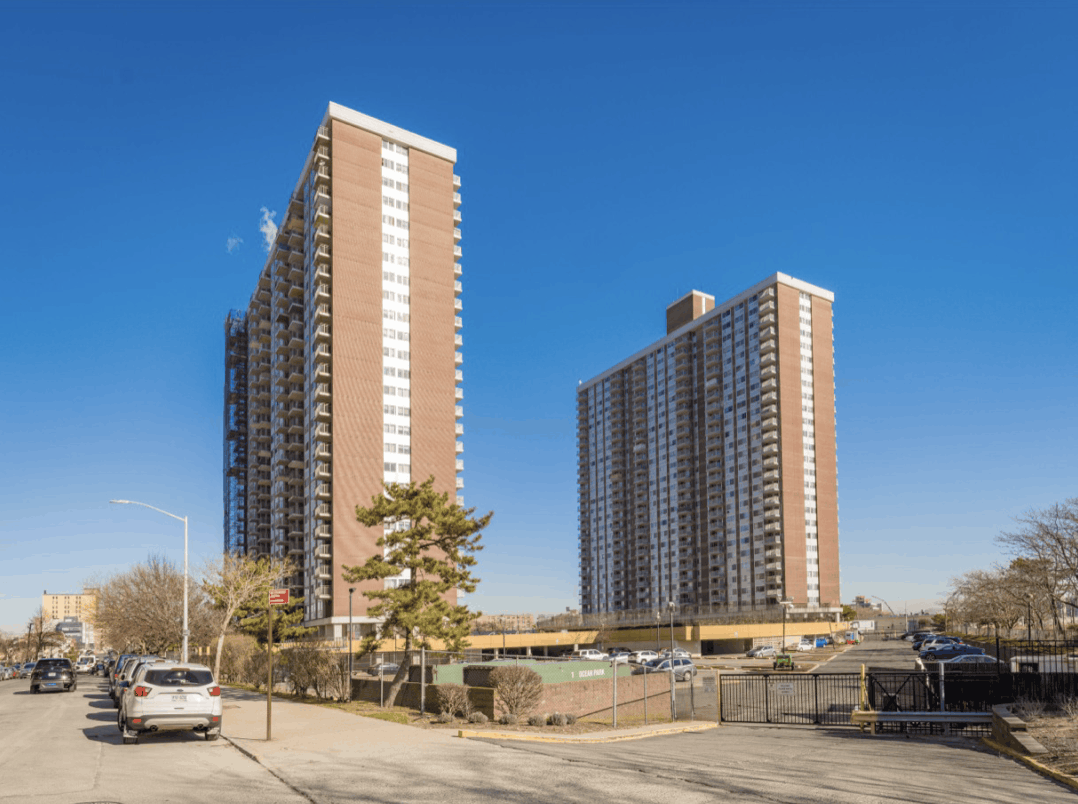
In 2019 a RAD conversion paid for $560 million in upgrades at Ocean Bay Apartments in Far Rockaway, allowing nearly 4,000 residents to stay in their apartments while the work went on. (The NYCHA development has no connection to Tredway’s Ocean Park Apartments, which are also in Far Rockaway.) Across the city, PACT now covers more than 44,000 apartments, and repairs worth more than $16 billion are either finished, underway or planned. In a survey NYCHA cited, 77 percent of residents said they were very satisfied with their building’s renovations.
While there has been controversy surrounding the policy, tenant advocates have called for closer federal monitoring of RAD’s tenant protections and raised questions about higher eviction rates. A national study published by NYU’s Furman Center in June 2026 found no evidence that converting public housing to Section 8 increased eviction rates.
Tredway acquired its Christopher Homes portfolio, which includes more than 1,600 affordable homes all occupied by older residents and residents with disabilities, from the Archdiocese of New Orleans in March 2026 and committed to keeping that federal support in place and the homes affordable for at least 40 years. The homes are spread across 10 properties in five parishes, and HUD rent support covers more than 99 percent of the people who live there. The properties are still managed by Providence Community Housing, a local nonprofit.
“Christopher Homes represents an important opportunity to keep a vulnerable aging population safely in their homes and in their community, with a major investment in critical housing infrastructure that will help residents age in place with the dignity and respect they deserve,” Blodgett said in the closing announcement.
Affordable Housing Finance ranked Tredway the nation’s 10th most active developer in acquiring and preserving affordable housing in 2025, the year before the New Orleans deal closed. Tredway operates in 11 states and expects to own more than 20,000 affordable homes across more than 35 states by the end of 2026. The 21st Century ROAD to Housing Act, which became law on July 11, 2026, raised RAD’s cap by 100,000 homes to make room for more conversions and extended protections for tenants in RAD buildings. In New York, the city financed the preservation of more than 900 NYCHA apartments through PACT in the first half of 2026.
Blodgett told Commercial Observer in January, “Look, these are these people’s homes. I’m just here to help them take care of these homes.”