

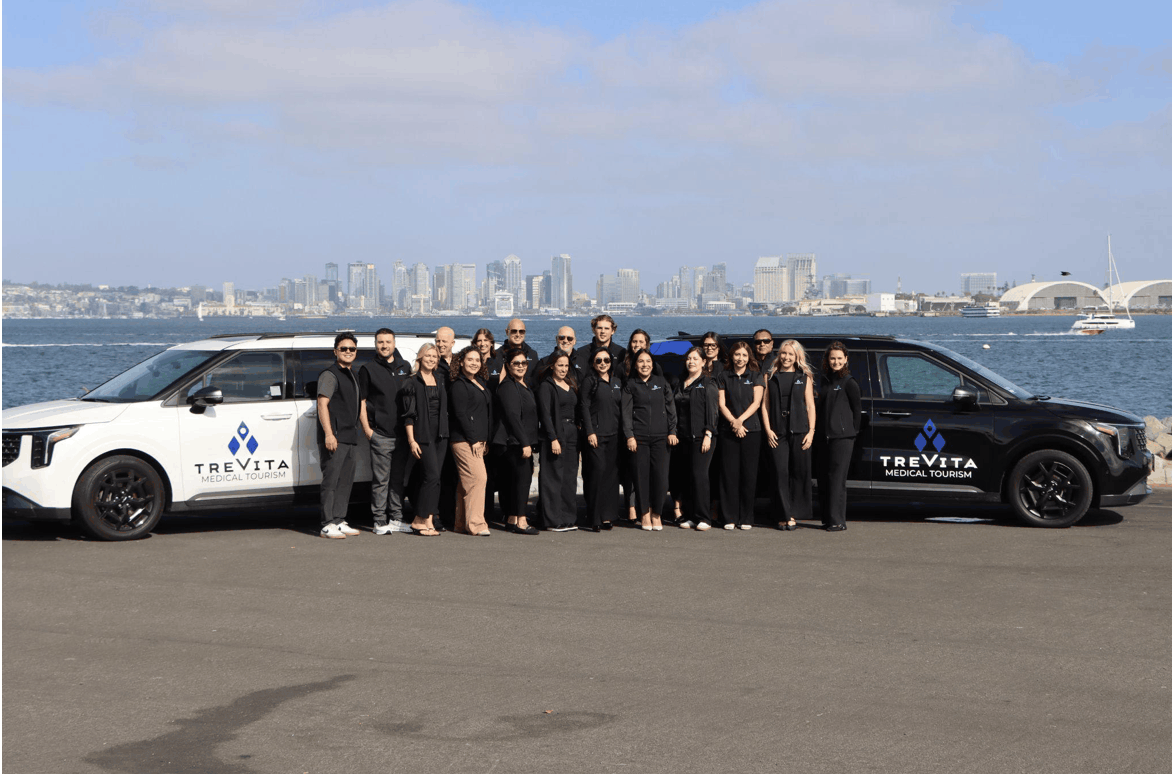
Rising demand, changing patient demographics and the appeal of coordinated medical travel are transforming the San Diego–Baja healthcare corridor.
For a growing number of Californians considering plastic surgery, the search for the right physician no longer stops at the U.S. border. Just south of San Diego, Baja California has become an attractive destination for Americans exploring cosmetic procedures, drawn by affordability, greater scheduling flexibility and access to specialized medical services.
The trend is creating opportunities for companies that help patients navigate international healthcare, including San Diego-based TreVita, which recently announced their plastic surgery programs abroad have grown 127% year-over-year, with 19% more men seeking out the service.
The company’s growth offers a glimpse into the broader shift in how Americans are approaching elective medical care, particularly as patients weigh the cost of domestic procedures against options available in Mexico.
According to the American Society of Plastic Surgeons (ASPS), cosmetic surgical procedures in the United States increased 7% in 2025, with liposuction, breast augmentation and tummy tucks among the most popular. Meanwhile, the widespread adoption of GLP-1 weight-loss medications is introducing another group of potential patients: people interested in addressing excess skin and changes in body contour after significant weight loss.
In fact, 82% of ASPS member surgeons reported receiving consultation requests related to GLP-1 use in 2025, although the organization cautions that its data does not establish a direct causal relationship between the medications and increases in specific procedures.

For Californians, Mexico offers a geographical advantage. Mexico’s Zona Río medical district is located around 20 minutes south of San Diego, allowing patients to access international care without the extended travel associated with other medical tourism destinations.
But the appeal goes beyond how close it is.
Elective procedures are often paid for out of pocket, making cost a significant consideration. Patients may also find greater flexibility in scheduling consultations, coordinating multiple services and arranging dedicated recovery accommodations. For some, the ability to combine medical care with a coordinated travel and recovery experience makes international treatment particularly attractive.
Still, choosing a surgeon in another country presents challenges.
Medical licensing systems, professional certifications, facility standards and patient reviews can be difficult to evaluate from abroad. Patients must also consider transportation, language differences, recovery arrangements and follow-up care after returning home.
The Centers for Disease Control and Prevention always recommends researching physician credentials and facility standards, understanding potential costs and arranging appropriate medical follow-up before traveling for medical care.
That is where medical travel facilitators such as TreVita are seeking to differentiate themselves.
Rather than operating as a surgical provider, TreVita coordinates the process of accessing care through partner physicians and medical facilities. Its services begin with consultations and medical review, followed by assistance selecting physicians, arranging travel and accommodations, coordinating procedures and supporting recovery.
The company utilizes a vetting process it calls TreVita Verified, which includes independent verification of medical education, professional licensure and specialty certifications, reviews of professional history and patient feedback, and in-person evaluations of physicians and facilities.
TreVita currently works with multiple vetted medical facilities in Zona Río and is expanding its network to meet growing demand. The company also offers plastic surgery services through partner clinics in Cartagena, Colombia, where clients can access private recovery accommodations with nursing and post-operative support.
TreVita says that it coordinates the entire medical travel experience, from transportation and accommodations to physician consultations, procedures and post-operative care. The company also highlights that it provides recovery support, including nursing services and care coordination, along with follow-up appointments after clients return home.
“Plastic surgery is becoming relevant to a much broader group of people than it was even a few years ago,” said Blake Schroeder, CEO of TreVita. “We’re seeing that firsthand, from more men exploring procedures to clients looking to address changes after significant weight loss.”
That growing male demographic is an interesting aspect of this growth. TreVita’s reported 19% increase in male clients suggests cosmetic procedures are reaching audiences that may have been less likely to consider surgery in previous years.
For TreVita, plastic surgery is only one part of a larger strategy. The company has also expanded into hair restoration, bariatric surgery and regenerative medicine, including stem cell services, positioning itself as an emerging leader in the region’s medical travel industry.
The broader question is whether companies offering coordinated services and greater transparency can make international medical care easier for Americans to navigate without minimizing the risks involved.
For Californians weighing their options, the border increasingly represents another potential avenue for elective care. And as demand grows, the companies that can demonstrate credible physician vetting, clear communication and consistent support throughout the medical journey may be best positioned to shape the next chapter of cross-border healthcare.