

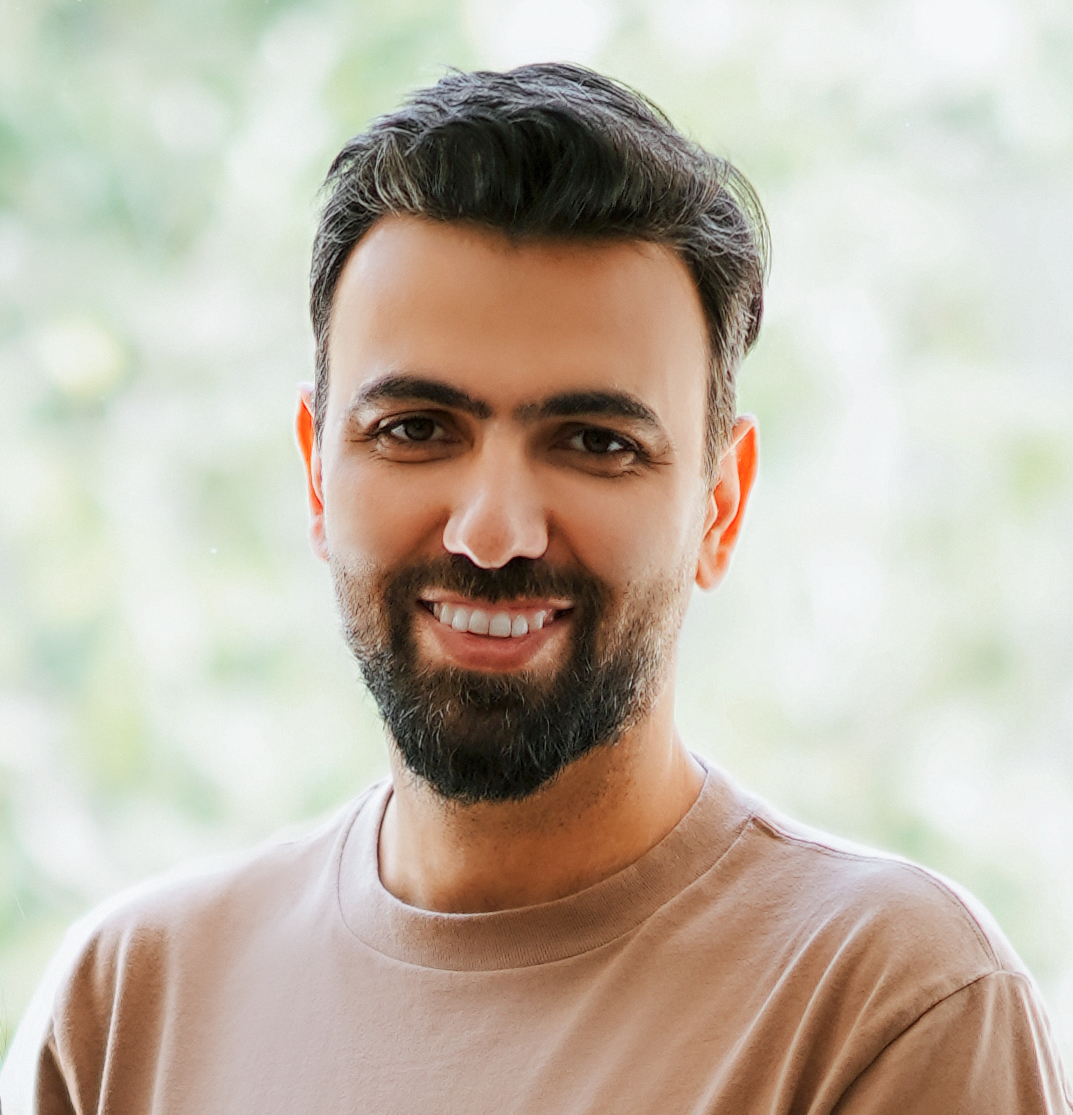
KEY TAKEAWAYS:
- Mohammad Noshad and his brother Morteza launched Shyld AI in 2022 in response to Mohammad losing a close friend to a hospital-acquired infection.
- Aulis Capital led Shyld AI’s $13.4 million seed round, and Shyld AI now operates devices in more than 30 U.S. hospitals.
- Peer-reviewed research at Stanford, published in AJIC, showed that Shyld AI’s autonomous UV-C system reduced hospital surface contamination by more than 93%.
More than 30 U.S. hospitals now run Shyld AI’s technology, and the company also closed a $13.4 million seed round led by Aulis Capital in early 2025, one of the year’s largest early-stage healthcare AI raises. Mohammad Noshad, the company’s founder and CEO, sees the milestone as the payoff of a path that began somewhere far more personal.
That personal thread runs back to a close friend who went in for routine surgery and did not survive an infection contracted at the hospital. The loss set him and his brother Morteza on the path to founding Shyld AI in 2022. Their goal from the start was to put patient safety directly inside the rooms where care happens, rather than somewhere further downstream. CDC data still attributes roughly 72,000 U.S. deaths each year to healthcare-associated infections, a number Shyld AI is working to bring down hospital by hospital.
How the technology works without a person in the room
A Shyld AI unit mounts on a hospital wall and looks about as ordinary as a smoke detector. Inside it, sensors track activity across the room around the clock, watching for the exact moments that pose a contamination risk: a shared keyboard touched by multiple patients, a surface left uncovered during a room turnover. Once the system flags one of those moments, a built-in UV-C light fires a targeted dose that clears the surface within seconds, without anyone stepping inside.
Most healthcare AI on the market stops well short of that. A system spots a problem, posts it to a dashboard, and waits for a clinician or environmental services worker to read it and respond. Shyld AI closes that loop itself, executing the response the moment it detects the risk.
The decision-making runs on VERTEX, Shyld AI’s own foundation model, built in partnership with NVIDIA to process everything locally on the device rather than through a hospital’s cloud systems. That local processing keeps the system running even if the network goes down, meaning no video or patient data ever has to leave the room. The closed-loop, HIPAA-compliant design has made the technology easier for hospital IT and compliance teams to sign off on, and installing one looks much more like hanging a smoke detector than deploying a piece of clinical software.
The research behind it and the brothers who built it
An independent Stanford University study, published in the American Journal of Infection Control, tracked the system for several weeks inside one of the hospital’s busiest clinical units and found it cut cumulative microbial bioburden by more than 93% compared with a room cleaned manually. That result has translated directly into commercial pull. Shyld AI now runs in more than 30 hospitals, and its sales cycles close in eight to ten weeks, a fraction of the twelve to eighteen months hospital technology purchases usually take.
“We’re moving the industry from passive AI to Active AI, technology that understands how hospitals operate and improves workflows in real time without adding burden to clinical teams,” said Mohammad Noshad, founder and CEO of Shyld AI.
Noshad’s path to founding the company ran through a PhD completed in two and a half years, several years of AI research at Harvard, and two earlier companies he built and exited before turning to healthcare. His brother Morteza, who co-founded Shyld AI alongside him, holds a doctorate in computer science from Stanford and built the technical architecture behind VERTEX.
Where the technology goes from the hospital room
Shyld AI’s ambitions run well past disinfection. Inside operating rooms, its devices already track surgical readiness, catch missing instruments before a case starts, and flag delays before they cost real money, a meaningful factor in a setting where every minute of OR time runs into the hundreds of dollars. The company has also begun working with pharmaceutical partners to bring the same architecture into cleanroom environments, where contamination control is equally important.
Noshad’s longer-term goal is bigger than any one hospital deployment. He describes Shyld AI as building an entirely new category, autonomous AI for physical spaces, one that didn’t exist as a defined market a few years ago. What started as one man’s response to losing a friend now runs quietly across dozens of hospitals nationwide, working every day to keep that same outcome from happening to someone else.
To learn more about Shyld AI’s technology or schedule a demo, visit shyld.ai or connect with Mohammad Noshad on LinkedIn.
About Shyld AI
Shyld AI is a healthcare technology company bringing physical agentic AI to hospital operations. Founded by CEO and Co-Founder Mohammad Noshad, Shyld AI develops autonomous physical agents that streamline hospital operations like infection control, OR efficiency, and compliance, without adding workload for staff. Its technology combines AI with UV disinfection to reduce environmental contamination by up to 93%. Shyld AI is deployed across hospitals nationwide, improving clinical care, efficiency, and cost savings. To learn more, visit www.shyld.ai/