

We all know that specific kind of exhaustion. It’s the feeling you get after another endless strategy meeting, staring at a color-coded five-year plan that everyone nods at, but no one actually believes in anymore. It’s the quiet panic of trying to hold everything together, micromanaging every variable, and desperately hoping the roof doesn’t cave in.
Whether you’re running a local nonprofit, leading a neighborhood community group, or trying to keep a faith congregation alive, the burnout is real. And honestly, the old playbook isn’t working.
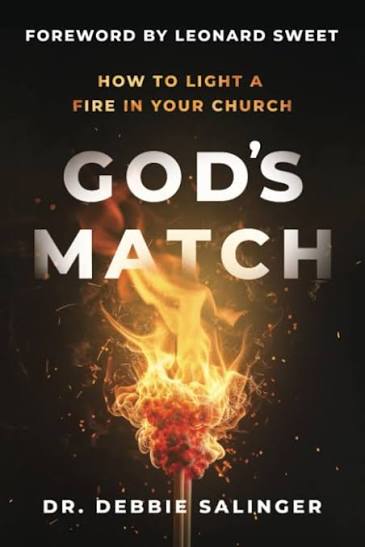
In her powerful book, God’s Match: How to Light a Fire in Your Church, Dr. Debbie Salinger calls out this exact phenomenon. She describes declining organizations as “zombie institutions.” They aren’t dead, but they aren’t really alive, either. They just go through the motions, paralyzed by a fear of change, clinging to the past, and suffocating under the weight of their own anxiety.
What makes Dr. Salinger’s perspective so refreshing is that she isn’t just speaking from a pulpit. Drawing from her extensive background in leadership and ministry, she knows exactly what it takes to manage strict budgets, navigate complex systems, and guide teams through uncertainty. She also knows, from hard experience, that you cannot spreadsheet your way out of a culture crisis.
Planning, budgets, and organizational systems serve important purposes. Congregational renewal also requires prayer, spiritual discernment, and a willingness to follow where God is leading. Why? Because true turnaround isn’t about better management. It’s about what Dr. Salinger calls “Holy Spirit combustion.”
And if you know anything about a real fire, you know it isn’t neat, predictable, or easily controlled. To get a fire going, you need three very specific things: fuel, heat, and oxygen. Although written for churches, the book raises questions about institutional habits, leadership, and openness to change that readers in other settings may also recognize.
First, you need fuel. In our culture, we love to protect our legacy. We hold onto “the way we’ve always done it” like it’s a sacred relic. But if you want to start a new fire, you have to be willing to use the past as kindling. That means sacrificing outdated habits, letting go of pet projects that no longer serve the mission, and dismantling the security blankets that keep your team from taking real risks. You can’t build the future if you’re hoarding the past.
Second, you need heat. We are often taught that good leadership means keeping the peace at all costs. We avoid conflict. We smooth things over. But Dr. Salinger argues that heat, the friction of healthy debate, passionate brainstorming, and daredevil risk-taking, is exactly what you need to spark a flame. Discomfort isn’t always a bad thing. Sometimes, a little friction is the only way to remind your people that they are still alive and that the work still matters.
Finally, you need oxygen. In the book, Dr. Salinger is crystal clear about what this oxygen is: it is the Holy Spirit. “For us, that ‘breath’ is the Holy Spirit of Christ among us, our all-powerful, almighty source for both identity and change,” she writes. Without the Holy Spirit as our oxygen, we are just dry wood. We can’t manufacture this breath through a clever community outreach program or a new strategic plan. We have to surrender to it.
When a community finally allows the Holy Spirit to be its oxygen, the true hope of God’s Match kicks in. Dr. Salinger describes what a Spirit-infused community actually looks like. It’s a community with a high “Adaptability Quotient,” or AQ. These communities don’t just wait for people to come to a traditional building; they actively create “third spaces.” These are safe, non-judgmental environments outside of home and work where people can be authentic, express their struggles, and find genuine connection without fear of gossip or exclusion.
Instead of operating with a hierarchical “us versus them” mentality, a Spirit-led community flips the dynamic entirely. As Dr. Salinger explains, the community does not minister to others; it ministers with its neighbors. “They learn together. They explore together. They laugh together. They cry together.”
But here is the most beautiful part of Dr. Salinger’s message: it’s not about starting from scratch. It’s about recognizing the life that is already there, waiting to be nurtured.
She shares a deeply personal story about her daughter’s garden. Her daughter had worked hard pouring love into the plants, and they were blossoming beautifully. But when her daughter went away on a trip and her sister watched the garden, the plants came back withered and dying. Her daughter was devastated, crying that they were all dead.
Dr. Salinger looked at a picture of the garden later, seeing ginger lilies sporting both green and brown leaves. She texted her daughter a simple, profound truth: “Salvageable. The roots are alive. They just need some love.”
The garden becomes an image of hope for congregations facing decline: signs of withering need not mean that all life is gone. Renewal calls for attention, nurture, and openness to what God may yet bring forth.
You cannot force a cultural revival. You can’t mandate passion. But you can set the stage for it. As Dr. Salinger beautifully puts it, “We can’t ‘make’ the Spirit raise a church any more than we can make the wind do our bidding, but we can provide a windmill and a match.”
We can choose to stop dousing every little spark of innovation because it doesn’t fit the budget. We can choose to stop avoiding the tough conversations that generate the heat we need to grow. We can choose to clear away the dead brush of our old assumptions and finally invite the Holy Spirit to saturate the room.
It’s going to be messy. It’s going to be unpredictable. And it’s going to require you to let go of the steering wheel. But if you want to build something that actually lasts, something that breathes, burns, and lights up the room, it’s the only way forward.
Stop trying to manage the fire. Just give it the fuel, the heat, and the oxygen of the Holy Spirit, and watch what happens.
God’s Match: How to Light a Fire in Your Church is available now. Learn more at SpiritFireMatch.com.
About the Author
Dr. Debbie Salinger is a recently retired United Methodist elder in the Florida Conference. She holds a Doctor of Ministry degree from Portland Seminary, where her studies concentrated on Semiotics, Church, and Culture.